Poultry biosecurity

Keep wild birds away from your flock

Wild birds are the natural carriers of avian influenza. The AVIX Autonomic laser keeps them off your houses, ponds and feed areas around the clock, without chemicals, noise or daily labor.

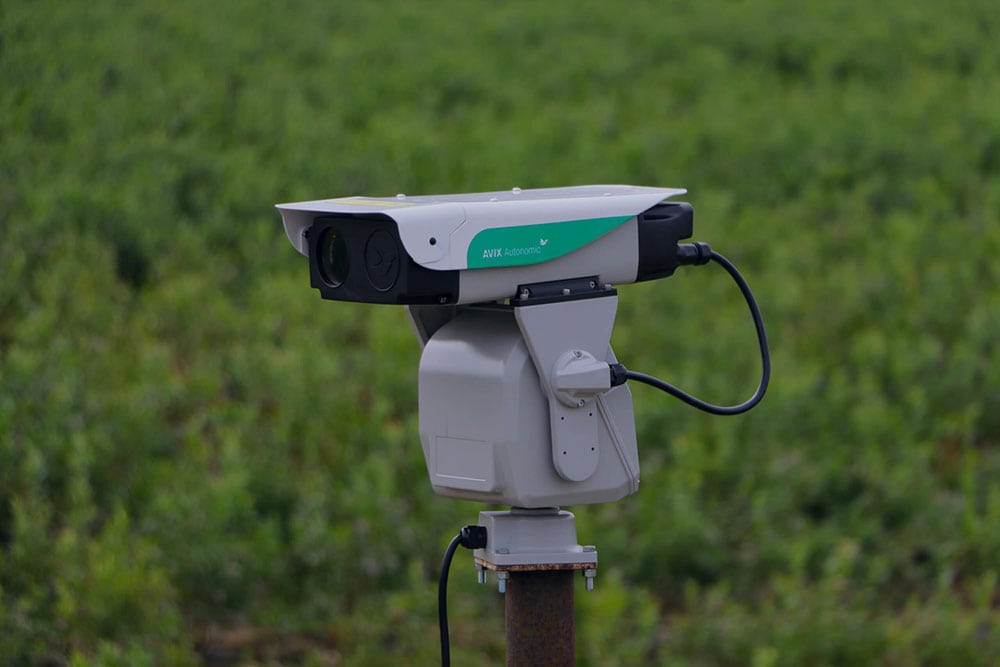
AVIX Autonomic laser bird deterrent unit AVIX Autonomic
Why it matters

Most avian flu starts with a wild bird

Waterfowl, gulls and other wild birds carry avian influenza without getting sick and shed it wherever they land: on roofs, around ponds, near feed bins and along truck routes. USDA investigations have traced most introductions into commercial flocks back to wild birds. Keeping them from landing on and around your houses removes one of the biggest risks your biosecurity plan can't control with a fence or a footbath.

  • Runs 24/7, unattended, on schedules set in the AVIX Connect app
  • Sweeps from random angles at random moments, so birds don't get used to it
  • Grid or solar powered, IP66-rated for outdoor use from 5 °F to 122 °F
  • Non-lethal and chemical-free, with no noise to stress your birds
Where we place lasers

The hot spots on a poultry site

Every site is different, but wild birds tend to gather in the same places. We map yours during the site assessment.

Structures

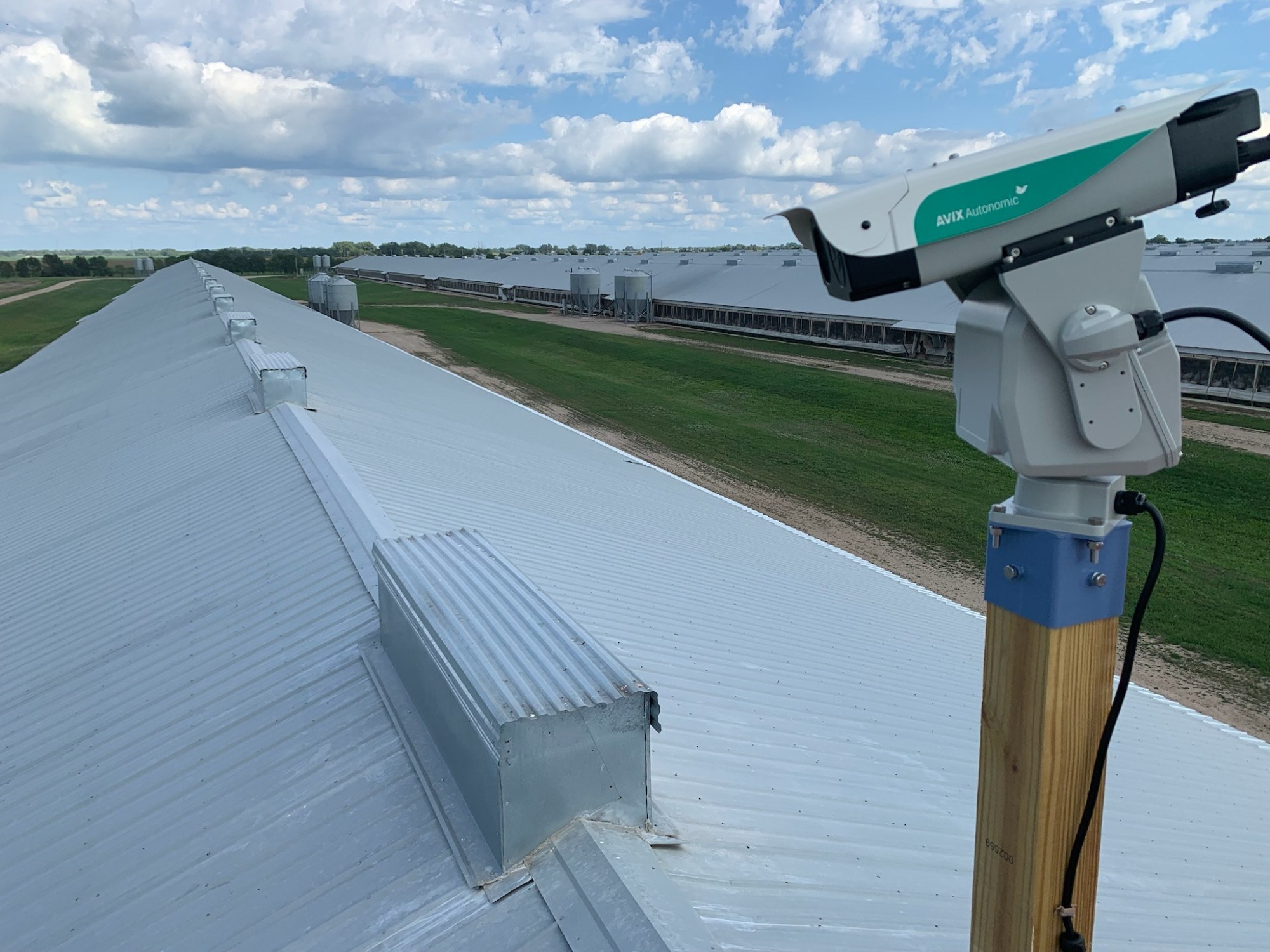
House roofs & ridge vents

Birds rest on rooflines directly above your flock and near air intakes.

Water

Ponds & standing water

Retention ponds and puddles draw the waterfowl most likely to carry the virus.

Feed

Feed bins & spill areas

Spilled feed around bins and augers is an open invitation to starlings and sparrows.

Outdoors

Free-range & pasture areas

Open ranges where wild birds and flocks can share the same ground.

Operations

Manure, compost & loadout

Areas that attract gulls and blackbirds and sit along vehicle traffic.

Every site type

Layers, pullets, broilers, hatcheries & turkeys

Cypress has deployed lasers across egg, pullet, layer, hatchery and turkey operations.

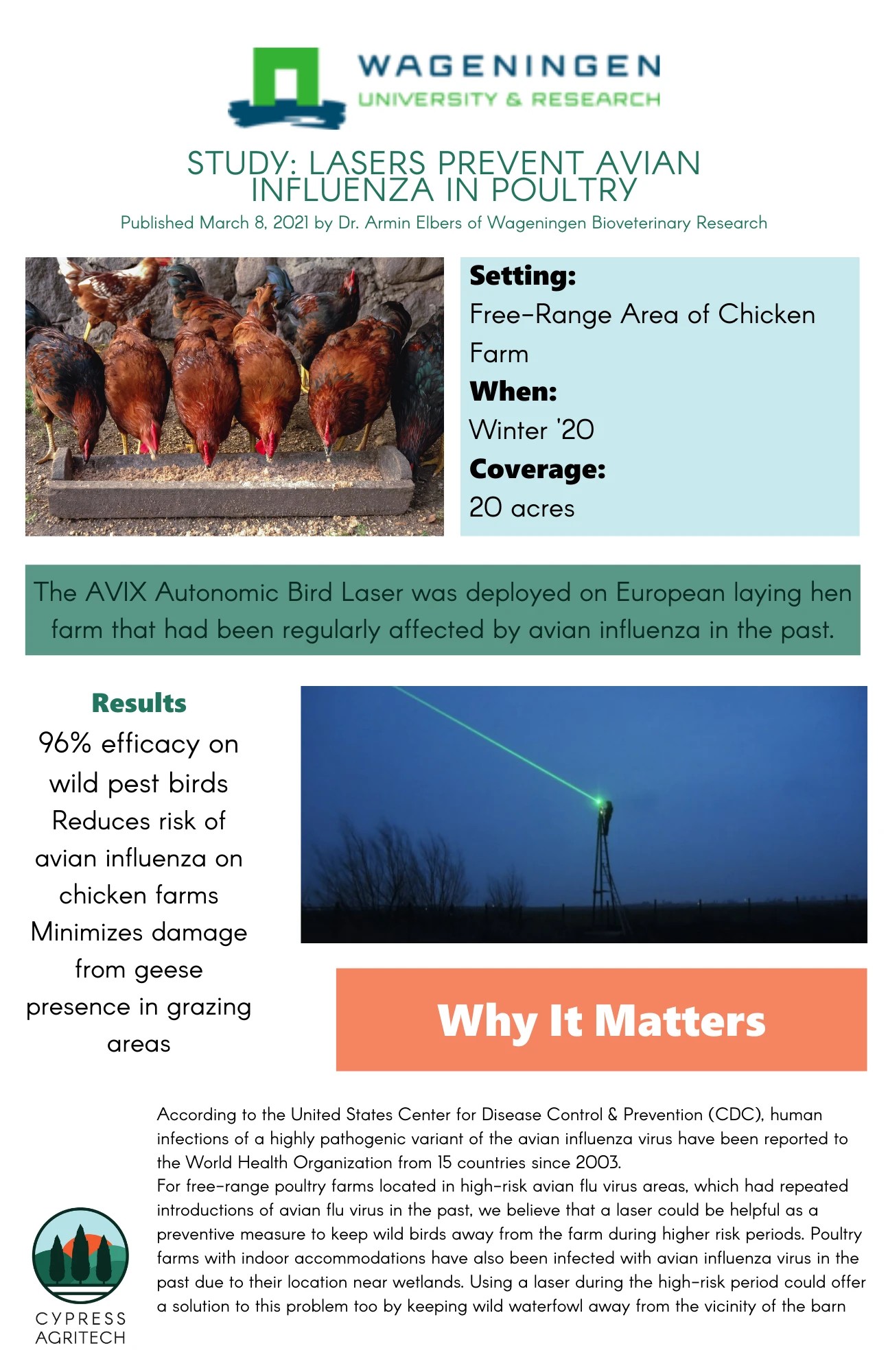
Summary of the Wageningen University study on AVIX lasers at a free-range poultry farm
Peer-reviewed research

98.2% fewer wild bird visits

A Wageningen University study published in Scientific Reports tested the AVIX laser at a free-range poultry farm and found it cut wild bird visits by 98.2%.

Read the full study →

Common questions

Poultry FAQ

What poultry producers ask us before adding lasers to their biosecurity plan.

Is the laser safe for my flock and my workers?

Yes. The AVIX Autonomic only projects across the zones programmed for your site, such as roofs, ponds, feed areas and the perimeter, and is kept away from people and from birds inside the house. It has a key-lock switch, emergency stop, password protection and a laser-on indicator, and every Cypress install includes laser safety training for your team.

Does a laser replace my biosecurity plan?

No. It adds a layer your current plan probably doesn't have: keeping wild birds from landing on and around your houses. It works alongside your existing measures like controlled access, sanitation and footbaths.

Which birds does it work on?

Waterfowl, gulls, starlings, blackbirds and other pest species all react to the moving beam. We'll confirm what's showing up on your site during the assessment and program the laser around it.

Can it cover ponds and standing water?

Yes. Retention ponds and standing water are common laser zones on poultry sites because they attract the waterfowl that carry avian influenza.

How many lasers does a poultry site need?

It depends on the number of houses, ponds and open areas and on the site's layout. We size every deployment during a site assessment before you commit to anything.

What does it need for power?

A standard power adapter (100–277 VAC), or an optional solar kit for spots without power. The unit is IP66-rated for outdoor use from 5 °F to 122 °F.

Get started

Find out what it takes to protect your houses

Tell us about your site and we'll map where wild birds are getting in and size the deployment before you commit to anything.

Request a poultry site assessment